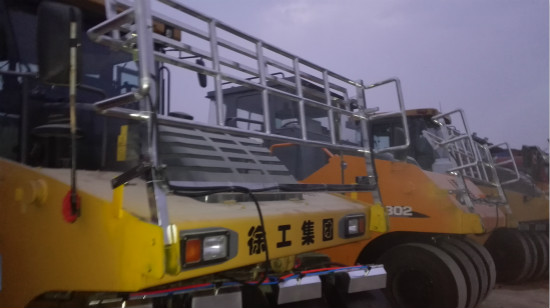
Weixian triggered roller anti-collision device
Road roller safety rules: 1 prevention and 6 safety measures. By doing these, you are a master!
Roller is one of the essential rolling equipment in highway construction. In order to further improve the efficiency of roller use and ensure the quality of rolling, good operation and maintenance habits are very necessary, especially for novice drivers. Developing good operation habits can not only improve work efficiency but also avoid unnecessary accidents. Today, the editor will take a look at the "One Prevention" and "Six Safety" in the use of road rollers with everyone.
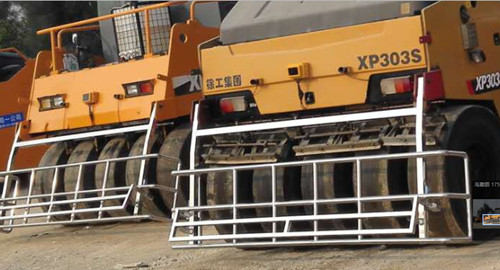
Weixian triggered roller anti-collision device
1. Preventing accidents
Ensure that there are no obstacles on the entire working surface of the roller.
Be sure to keep the hydraulic oil and lubricating oil clean and free from deterioration.
Do not start the engine by dragging the roller.
When driving a road roller, always pay attention to the operation of the machine and immediately stop for maintenance if any problems are found.
During engine operation, do not stand on the front and rear wheels, and do not approach the articulated frame.
The operation of the roller must not be abandoned, and the driver is prohibited from leaving the machine while the locomotive is running. Whether the forward and reverse driving, steering, throttle and brake actions are normal.
The roller must be parked on a slope and the front and rear wheels must be blocked with triangular wooden blocks.
When the road roller is parked on the roadside, it should be confirmed that it will not cause traffic accidents, and signal lights should be installed at night.
2. Security check
Carefully inspect the roller, ensuring that all components are intact and free from oil, water, or electrical leakage. It is strictly prohibited to use a roller with defects for construction operations.
Check whether the fuel oil, hydraulic oil, lubricating oil, brake oil, cooling water, counterweight water, and sprinkler of the road roller meet the working requirements. Smoking is never allowed when checking the fuel level.
Check whether the tire pressure is normal and whether there is any leakage. If any abnormalities are found, they should be reported to the management personnel in a timely manner.
Regularly keep the road roller clean, and there should be no lubricating grease or other dirt on the driving platform. The handwriting and symbols on the instruments, gauges, and signs on the control console should be clear and readable. Especially, it is necessary to polish the glass and mirrors in the driver's cabin.
Drivers or repair personnel should use pedals and handles when getting on the car to avoid slipping.
Before driving a new car, carefully read the operating manual, understand the functions and usage methods of each control component and instrument, and try to operate the machine.
3. Safe startup
First, test whether the various control mechanisms are flexible, whether the forward and reverse driving, steering, throttle and brake actions are normal.
After starting the engine, pay attention to checking whether the readings of various instruments are normal, listen for any abnormal noise from the engine, smell for any strange smell, and check for any signs of engine disease. If any abnormality is found, the engine should be immediately shut down.
Before putting the roller into operation, release the handbrake and carefully check and adjust the steering, braking, and various control components to ensure they are normal and flexible.
Before starting the road roller forward or reverse, carefully inspect the front, back, left, and right sides of the vehicle for any obstacles. When the locomotive is moving, sound the warning signal first.
4. Safe driving
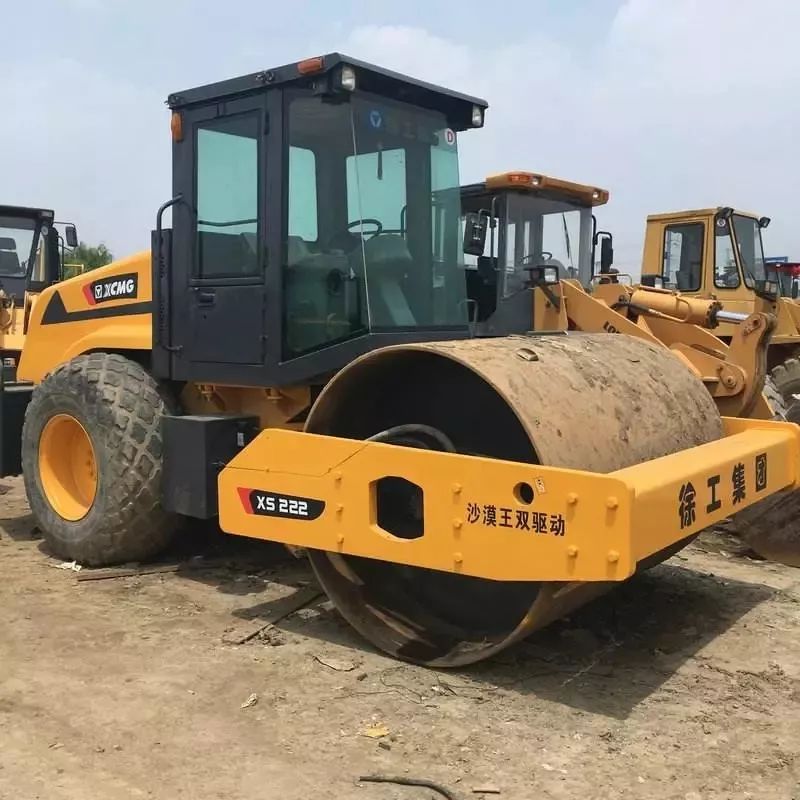
During the operation of the road roller, the driver should always hold the steering wheel, place their foot on the emergency brake pedal, and keep their eyes on the front, back, left, right, up and down from time to time.
When the road roller is traveling on a slope (whether uphill or downhill), do not shift gears. If it is necessary to shift gears, apply the brakes first. If the engine stalls during the process, brake immediately and tighten the handbrake. Before restarting, block the front and rear wheels with wooden blocks.
The road roller should travel slowly downhill and should not slide or slide. If necessary, the brake can be intermittently used to reduce the driving speed. Mechanical transmission rollers can also be slowed down by turning down the throttle. The roller is not allowed to run or stop laterally on the slope.
When the road roller passes through a bridge or tunnel, its bearing capacity and passage space should be confirmed in advance, and if necessary, all counterweight on the roller should be removed.
The road roller should turn slowly and not make sharp turns. The turn signal should be turned on promptly and observed carefully. Dangerous sharp turns.
When braking a mechanical transmission roller, the brake and main clutch can be used in conjunction, and sudden reversal of direction is prohibited for braking the roller.
In emergency situations, the emergency brake should be quickly closed, and the directional control lever should be pulled to the center position. Both hands should grip the steering wheel tightly as a support to cope with the emergency brake. Do not use emergency brakes unless in an emergency situation.
When the vibratory roller is running, the engine should run at full speed and it is not allowed to change the driving speed by idling.
During the operation of the road roller, no one is allowed to enter or exit the vehicle, and unrelated personnel are prohibited from staying nearby, especially near the articulated turning point.
5. Safe homework
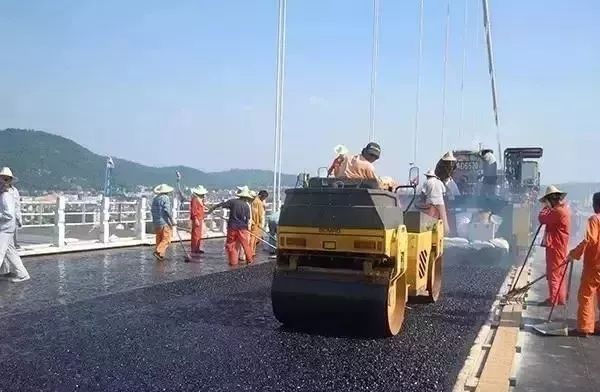
Before the roller enters the construction area, the safety of the construction site environment should be checked, and all obstacles and hazardous materials on the work surface should be removed.
When a vibratory roller is used for construction near a building, the safety of the building should be checked and confirmed in advance, and the safety distance for vibratory construction and restrictions on the use of vibratory rollers should be followed.
When using a roller to vibrate and compact, the walking direction or vibration amplitude should be stopped first. Do not vibrate on hard ground or in place to avoid damaging the components.
When using a tire roller for operation, the tire pressure should be maintained according to regulations. The tire roller shall not crush gravel blocks with sharp edges and corners to prevent puncturing the tires.
When the road roller is operating on the mountain side, it should roll at low speed from the side facing the mountain to the side facing the ditch and cliff, and the distance between the rolling wheel track and the ditch and cliff side should not be less than 1m.
Several road rollers shall form a longitudinal formation for driving or operation, with a distance of no less than 10 times the walking distance per second, and a minimum value of 5m.
The differential lock should not be engaged unless necessary, and the differential lock should be disengaged first when turning.
The high-speed gear of the road roller is only suitable for driving on flat roads and should not be used for compaction operations.
Work lights should be turned on when working at night or in foggy weather.
6. Safe Parking
After the roller has finished working, the driver should put the locomotive in the braking state, the reversing control lever in the neutral position, turn off the vibration switch, and stop the engine before leaving.
Personnel are not allowed to get on or off the road roller until it has come to a complete stop. Use the handle and pedal correctly when getting on and off the car, and do not jump off the car directly.
The roller should be parked on a wide and flat ground. When parking on a slope, use triangular wooden blocks to block the front and rear wheels. Otherwise, there may be danger due to oil leakage causing the machine to move and the pressure wheel to slide.
In the cold season, after parking, all cooling water, counterweight water, and sprinkler water should be drained to prevent freezing.
7. Safety maintenance
Repair tools should be carried on the roller at all times, but the roller must not be repaired or maintained during operation.
When repairing under the car, first stop the engine, tighten the handbrake, lock the steering mechanism, plug the front and rear wheels, and hang a warning sign.
When refueling, stop the engine and ground the fuel pipe to prevent sparks. Smoking and lighting with fire are strictly prohibited.
When checking the electrolyte level of the battery, do not use fire for illumination, as explosive gases formed during charging can cause explosions. The safe approach is to first disconnect the power and use a flashlight to illuminate and check the liquid level.
When opening the engine water tank cover in a hot car state, be particularly careful and wear gloves and protective goggles to prevent burns from high-temperature gases.
When using a high-pressure cleaning machine or compressed air for cleaning work, protective goggles should be worn.
When encountering a high-pressure oil pipe burst, do not touch or block the damaged area with your hands to prevent injury from high-pressure jet. For some small holes that are difficult to detect and leak oil, a cardboard test can be used. Wear protective goggles and gloves during the experiment.